 4,000
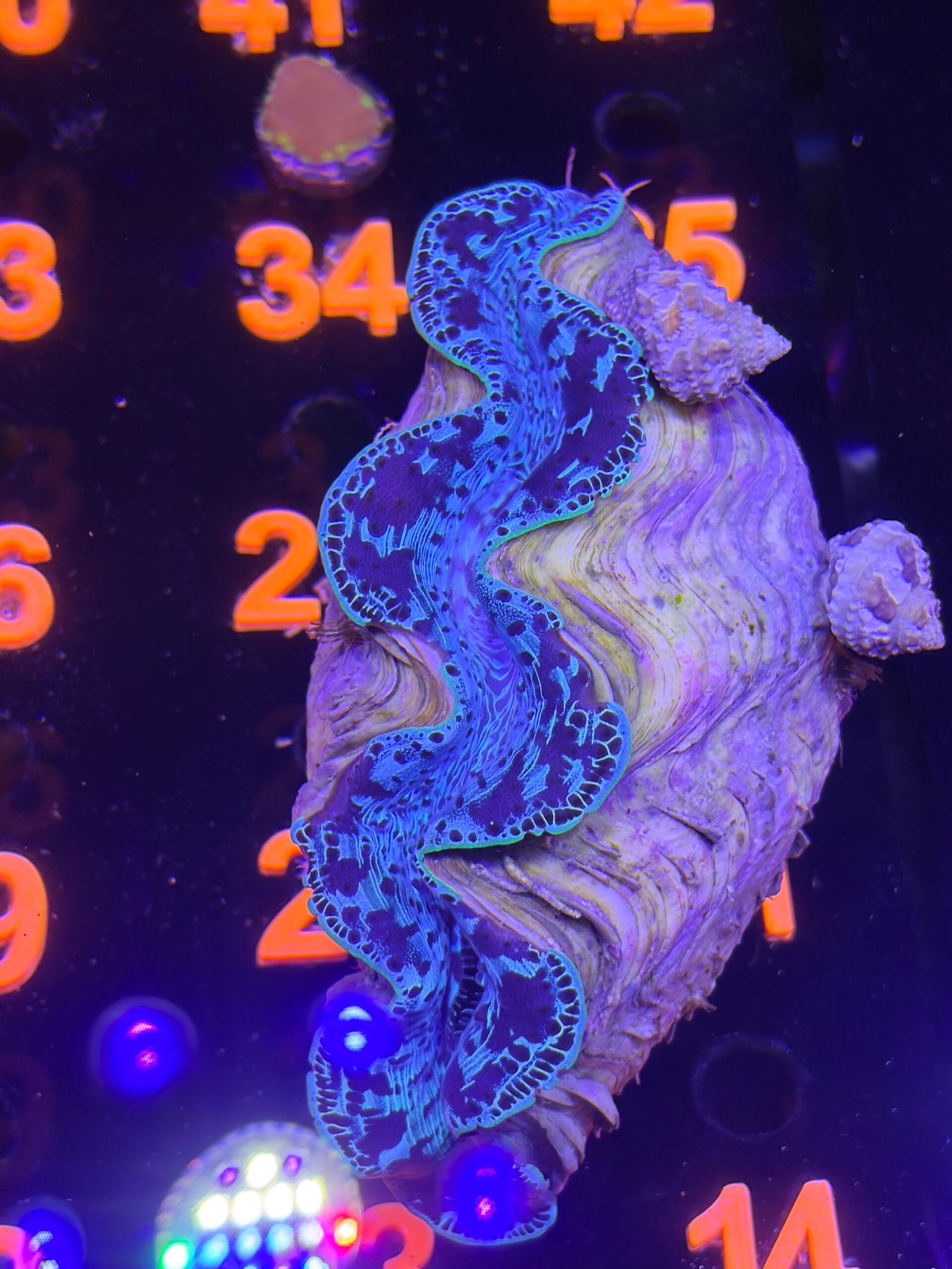
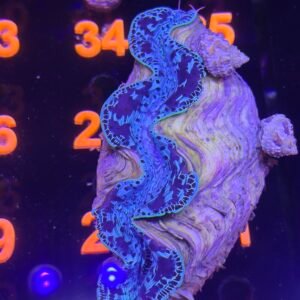
Maxima Clam; Ultra Grade – Tridacna maxima
Lighting (PAR)
- High Intensity: Maxima clams need strong lighting (typically 250 to 500 PAR) because they rely heavily on symbiotic zooxanthellae in their mantle for energy.
- Acclimation: Place new or smaller specimens lower in the tank or shade them briefly if they come from lower-light setups, then gradually move them up.
Water Parameters
- Temperature: Maintain a steady range of 75°F to 83°F (75°F to 78°F preferred).
- Calcium & Alkalinity: Keep calcium around 380–450 ppm and alkalinity at 8–12 dKH to support rapid shell growth.
- Magnesium: Target 1250–1450 ppm.
- Nitrate & Phosphate: Keep nitrates low (e.g., 0–10 ppm) and phosphates minimal (<0.03 ppm), though they do consume small amounts of dissolved nutrients from the water.
Placement & Flow
- Rockwork: Unlike sand-dwelling species (such as Derasa), Maxima clams naturally anchor themselves to hard rock surfaces using byssal threads.
- Never Glue: Never use glue or epoxy directly on the clam tissue or force-detach an attached clam, as tearing the byssal organ can be fatal. Place them in a concave rock pocket or use a small rock/clam cradle.
- Water Flow: Provide moderate, indirect flow. Avoid strong, direct jet streams that stress or tear the mantle.
Feeding
- Photosynthesis vs. Filter Feeding: Clams larger than 2 inches get most of their energy (up to 90%) from light via zooxanthellae and do not require targeted feeding.
- Small Specimens: Clams under 2 inches benefit from targeted feedings of live or powdered phytoplankton a few times a week.
Compatibility & Pests
- Tank Mates: Avoid fish that nip at mantles, such as certain angelfish, butterflyfish, puffers, and some wrasses or tangs. Keep aggressive stinging corals at a safe distance.
- Pests: Watch out for parasitic Pyramidellid snails or biting bristleworms/crabs

Reviews
There are no reviews yet.