 400
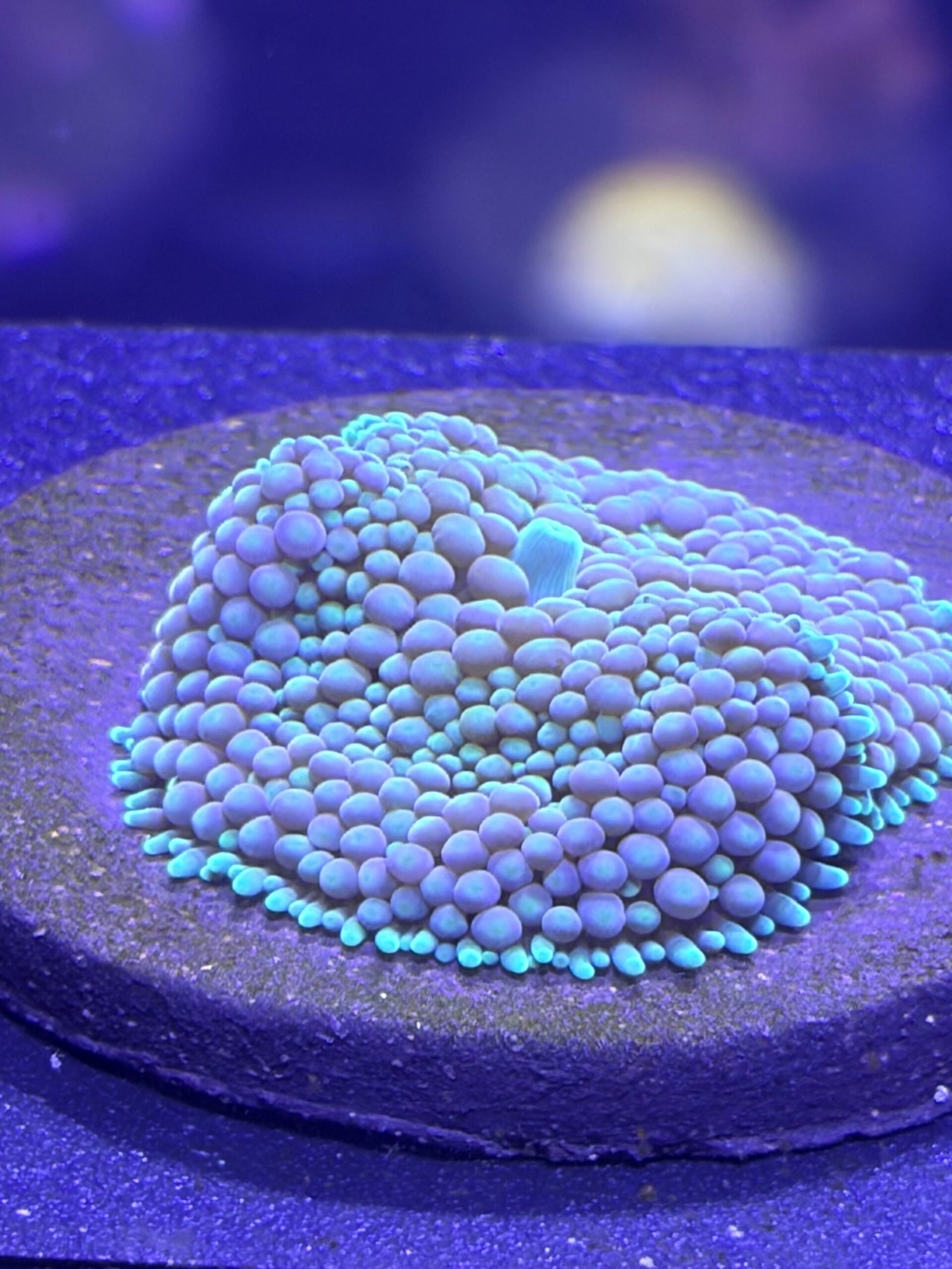
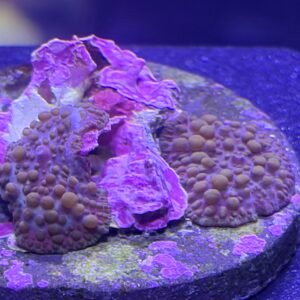
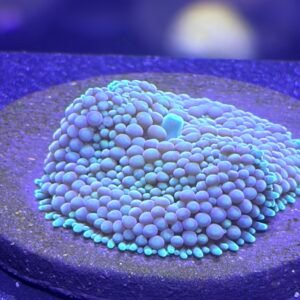
Ricordea florida mushrooms are hardy, colourful, and beginner-friendly corallimorphs. Native to the Caribbean, they feature distinct, uniform, bulbous vesicles covering their disc (unlike their Pacific cousin Ricordea yuma, which has vesicles continuing onto the mouth stem).
Key Water Parameters
While R. florida soft corals do not calcify or require heavy calcium consumption, they thrive best in stable, nutrient-soft water conditions:
Lighting Requirements
PAR Range: 50 – 150 PAR.
Intensity: Low to Moderate.
Spectrum: Standard LED reef spectrums work well, but actinic/blue spectrums (around 420–470 nm) highlight their neon blues, greens, oranges, and pinks.
Note: Excessive light (>200 PAR) causes stress, bleaching, shrinking, or detaching. Always acclimate new polyps in shaded or lower-light areas first.
Water Flow
Flow Level: Low to Gentle-Moderate, indirect flow.
Target Current: The water movement should be sufficient to prevent detritus from settling on the polyp without causing the disc to fold, curl tightly, or detach from its substrate.
Tank Placement & Aggression
Placement: Lower third of the tank, bottom rockwork, or on the sandbed attached to rock rubble.
Mushroom Islands: Placing them on an isolated rock structure surrounded by sand helps limit their gradual, natural spreading across primary rockwork.
Temperament: Semi-aggressive. They possess stinging nemato-vesicles and can sting delicate stony corals (SPS/LPS) or overpower slower soft corals if crowding occurs. Multiple Ricordea florida specimens can touch and form a communal “garden” without harming one another.
Feeding & Nutrition
Primary Source: Photosynthesis via symbiotic zooxanthellae provides the majority of their energy needs.
Target Feeding (Optional): 1–2 times per week. Offering micro-pellets, small mysis, brine shrimp, or powder coral foods stimulates faster division, richer color, and growth. Turn off circulation pumps during feeding so the mouth can slowly fold over the food particle.


Reviews
There are no reviews yet.